EN
EN



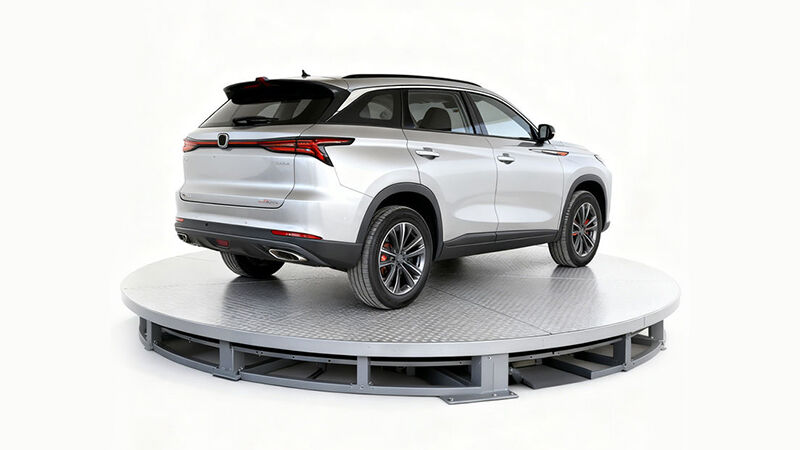
Parking operations in modern facilities face mounting safety challenges as vehicle density increases and spatial constraints tighten. Traditional parking maneuvers require drivers to execute complex reversing sequences in confined areas, heightening collision risks with structural elements, adjacent vehicles, and pedestrians. A car rotating platform fundamentally transforms this operational paradigm by eliminating hazardous backward movements and reducing human error factors that contribute to the majority of parking-related incidents. This mechanical solution addresses safety concerns through engineered rotation mechanisms that reorient vehicles without driver intervention, creating controlled environments where predictability replaces unpredictable human maneuvering.
The integration of car rotating platforms into parking infrastructure delivers quantifiable safety improvements across multiple operational dimensions. These systems reduce accident frequency by minimizing blind spot exposure during vehicle repositioning, eliminate the need for high-risk reversing maneuvers in tight quarters, and provide consistent operational patterns that reduce cognitive load on drivers. By transforming complex spatial navigation into straightforward forward-drive sequences, rotating platforms create inherently safer parking workflows that protect both property and personnel while enhancing operational efficiency in commercial, residential, and industrial parking environments.
Elimination of Reversing Hazards in Confined Spaces
Structural Collision Risk Reduction
Traditional parking configurations force drivers to navigate backwards through narrow corridors where structural columns, walls, and equipment create collision hazards. A car rotating platform removes this vulnerability by allowing vehicles to enter forward and exit forward after mechanical rotation. The platform's controlled rotation cycle eliminates the unpredictable trajectories inherent in human-operated reversing, where slight steering miscalculations result in contact with fixed obstacles. Industrial parking facilities report collision damage reductions exceeding forty percent following car rotating platform installation, as the mechanical guidance system maintains consistent clearance tolerances that human operators cannot reliably achieve under varied conditions.
The precision of platform rotation mechanisms ensures repeatable vehicle positioning that accounts for spatial constraints with engineering accuracy. Unlike manual parking where driver skill variation creates inconsistent safety margins, a car rotating platform executes identical rotation patterns regardless of operator experience level. This standardization proves particularly valuable in facilities serving diverse user populations including elderly drivers, inexperienced operators, and individuals with spatial judgment limitations. The mechanical system compensates for human variability by imposing physical constraints that prevent encroachment into hazard zones, effectively engineering safety into the operational workflow rather than relying solely on driver vigilance.
Pedestrian Safety Enhancement Through Movement Predictability
Reversing vehicles represent significant pedestrian hazards in parking environments where foot traffic intersects with vehicle movement zones. Children, maintenance personnel, and distracted individuals face elevated injury risks when vehicles maneuver unpredictably in reverse. A car rotating platform mitigates this danger by confining vehicle movement to forward-only travel paths, dramatically improving situational awareness for both drivers and pedestrians. The visible rotation mechanism provides clear operational signals that alert nearby individuals to vehicle repositioning activities, creating temporal windows where pedestrians can maintain safe distances without guessing driver intentions.
The controlled rotation speed of platform systems further enhances pedestrian safety by establishing predictable timing patterns. Standard car rotating platform configurations complete rotation cycles within thirty to sixty seconds at speeds slow enough to allow pedestrian response but fast enough to maintain operational efficiency. This deliberate pacing contrasts sharply with variable reversing speeds where drivers may accelerate suddenly or brake unexpectedly, creating unpredictable hazard scenarios. Parking facilities utilizing rotating platforms document reduced pedestrian incident rates as the mechanical rhythm of platform operation establishes clear behavioral expectations that both drivers and pedestrians internalize through repeated exposure.
Visibility Optimization and Blind Spot Mitigation
Rear Visibility Challenges in Conventional Parking
Blind spots during reversing maneuvers constitute primary causal factors in parking-related collisions and pedestrian strikes. Vehicle design inherently limits rear visibility through structural pillars, headrests, and cargo area configurations that obscure driver sightlines. Despite backup camera proliferation, these systems present two-dimensional representations that compress depth perception and create false confidence in spatial awareness. A car rotating platform eliminates dependence on compromised rear visibility by removing the reversing requirement entirely, allowing drivers to maintain forward visual orientation throughout parking sequences where windshield sightlines provide superior environmental awareness compared to rearward views.
The forward-facing operational model enabled by car rotating platform systems leverages natural human visual capabilities rather than compensating for physiological limitations. Peripheral vision functions most effectively in forward viewing orientations, providing drivers with enhanced hazard detection capacity during platform approach and exit sequences. This visual advantage proves especially critical in parking environments with complex layouts where sudden pedestrian emergence, shopping cart migration, or vehicle door openings create dynamic hazard fields. By maintaining forward visual orientation, drivers utilizing rotating platforms sustain continuous situational awareness that reversing maneuvers cannot replicate regardless of supplementary camera systems or sensor arrays.
Multi-Vehicle Interaction Safety in Dense Parking Arrays
High-density parking configurations intensify collision risks as multiple vehicles maneuver simultaneously in overlapping zones. Traditional reversing patterns create conflicting movement vectors where backing vehicles approach head-on, generating confusion regarding right-of-way and trajectory prediction. A car rotating platform structures vehicle flow into unidirectional patterns that eliminate crossing paths and reduce decision complexity for drivers navigating crowded facilities. The platform's rotation function creates natural sequencing where vehicles complete positional adjustments before adjacent spaces become active, temporally separating potentially conflicting movements that would otherwise occur simultaneously.

Commercial parking operators implementing car rotating platform systems observe improved traffic flow dynamics as the mechanical rotation process imposes orderly sequencing on what would otherwise constitute chaotic multi-directional maneuvering. The physical presence of the platform establishes clear spatial boundaries that prevent vehicles from encroaching into rotation zones during active cycles, creating protected operational envelopes. This spatial organization reduces near-miss incidents where drivers misjudge clearances between moving vehicles, a common scenario in conventional parking layouts where reversing vehicles approach from unexpected angles. The resulting safety improvement stems not from driver skill enhancement but from environmental redesign that makes unsafe maneuvers physically impossible.
Operational Error Reduction Through Mechanical Guidance
Human Factor Mitigation in Parking Maneuvers
Parking errors originate predominantly from human judgment failures under spatial constraint conditions. Drivers misjudge distances, miscalculate turning radii, and execute incorrect steering corrections during reversing sequences, particularly when fatigued, distracted, or unfamiliar with vehicle dimensions. A car rotating platform transfers critical positional control from human operators to mechanical systems engineered for precision, removing decision points where errors typically occur. The driver's responsibility reduces to straightforward forward driving onto the platform surface, a task requiring minimal spatial judgment compared to complex three-point turns or parallel parking maneuvers in restricted spaces.
The cognitive load reduction achieved through car rotating platform implementation manifests in measurably safer outcomes across diverse user populations. Elderly drivers who struggle with neck rotation required for backing maneuvers experience particular safety benefits, as platform systems accommodate physical mobility limitations without compromising parking capability. Similarly, operators of oversized vehicles including SUVs and trucks benefit from platform systems that eliminate the spatial calculation challenges inherent in maneuvering large footprints through tight quarters. By simplifying the operational task to a level manageable by all driver skill categories, rotating platforms democratize parking safety rather than creating systems that only proficient operators can navigate safely.
Consistency Across Variable Environmental Conditions
Environmental factors including rain, snow, ice, and darkness significantly increase parking accident rates as visibility degrades and traction diminishes. Reversing in adverse conditions combines reduced visual information with compromised vehicle control, creating compound hazard scenarios. A car rotating platform maintains operational safety consistency regardless of weather conditions because the mechanical rotation process occurs on a controlled surface with predictable traction characteristics. Drivers need only execute forward approach and departure maneuvers on the platform, movements that inherently carry lower risk than reversing even under ideal conditions, and substantially lower risk when environmental factors compromise visibility or road surface quality.
The enclosed or semi-enclosed configurations common in car rotating platform installations provide additional environmental protection that enhances safety margins. Platform surfaces can be engineered with drainage systems, heating elements, or textured coatings that maintain consistent traction despite precipitation or temperature fluctuations. This controlled microenvironment contrasts sharply with open parking areas where ice accumulation, puddle formation, or debris accumulation creates unpredictable surface conditions that drivers must navigate during already-challenging reversing maneuvers. The platform's environmental stability ensures that safety performance remains consistent across seasonal variations and daily weather cycles, eliminating the elevated accident rates that conventional parking facilities experience during adverse conditions.
Emergency Egress and Crisis Response Advantages
Rapid Exit Capability During Emergency Scenarios
Emergency evacuations demand rapid vehicle extraction from parking positions, a requirement poorly served by configurations requiring complex reversing sequences. Fire events, structural failures, or security threats necessitate immediate egress where seconds determine outcome severity. A car rotating platform facilitates emergency departures by pre-positioning vehicles in forward-facing orientations that enable instant acceleration toward exit routes without maneuvering delays. Drivers experiencing medical emergencies, fleeing security threats, or responding to facility evacuation orders can initiate forward travel immediately upon entering their vehicles, eliminating the spatial negotiation and potential panic-induced errors that reversing under stress conditions typically generates.
The psychological advantage of forward-facing parking orientation extends beyond mechanical convenience to encompass stress response management. Drivers in crisis situations exhibit degraded spatial judgment and motor control as adrenaline responses impair fine coordination required for precise reversing maneuvers. Car rotating platform systems accommodate these stress-induced capability reductions by removing tasks that demand calm precision, instead supporting the forward acceleration behaviors that stressed individuals execute more reliably. Facilities housing vulnerable populations including hospitals, senior living communities, and schools realize particular safety value from this emergency egress enhancement, as rapid evacuation capability directly correlates with casualty prevention during crisis events.
Service Vehicle and Emergency Responder Access Optimization
Emergency response vehicles including ambulances, fire trucks, and security units require unobstructed access to facility interiors, access often blocked by vehicles parked in orientations requiring time-consuming repositioning. A car rotating platform streamlines emergency vehicle circulation by ensuring all parked vehicles can quickly reorient to clear primary access corridors without complex backing maneuvers that delay critical response activities. The platform's rotation capability enables rapid space clearing as facility personnel or automated systems can rotate blocking vehicles during emergency response, creating access lanes that would otherwise require individual vehicle owners to execute reversing maneuvers under chaotic conditions.
Maintenance and service operations similarly benefit from the access flexibility that car rotating platform systems provide. Utility vehicles, delivery trucks, and equipment transporters can utilize platform rotation to position loads optimally for unloading activities without executing hazardous backing maneuvers near facility openings or pedestrian zones. This operational flexibility reduces accident risks during routine service activities where large vehicles maneuvering in reverse historically generate elevated incident rates. The platform's controlled rotation ensures that even oversized service vehicles achieve precise positioning without relying on spotter personnel or complex multi-point backing sequences that introduce human coordination failures into safety-critical operations.
Long-Term Safety Culture and Insurance Implications
Quantifiable Risk Reduction for Insurance Assessment
Insurance underwriters evaluate parking facility risk profiles based on historical incident data, structural hazards, and operational protocols. Facilities implementing car rotating platform systems demonstrate quantifiable risk reductions that translate to favorable premium adjustments and coverage terms. The mechanical elimination of high-risk reversing maneuvers provides actuarial evidence of loss frequency reduction, as rotating platforms remove the operational patterns responsible for the majority of parking-related claims. Property managers presenting car rotating platform installations during insurance negotiations document premium reductions ranging from eight to fifteen percent as underwriters recognize the engineered safety improvements these systems deliver.
The liability protection afforded by car rotating platform deployment extends beyond direct collision prevention to encompass premises liability defense. Facility operators face legal exposure when parking design creates unreasonable hazards that contribute to injuries or property damage. Installing rotating platforms demonstrates proactive safety investment that establishes duty-of-care compliance, strengthening legal positions when incidents occur despite safety measures. This liability shield value proves particularly significant for commercial facilities serving public populations, where premises liability claims can exceed direct property damage costs by substantial margins. The documented safety enhancement from platform systems provides tangible evidence of reasonable care that supports legal defense strategies while simultaneously reducing incident frequency that triggers claims.
Behavioral Safety Culture Development
Repeated exposure to car rotating platform operations cultivates safety-conscious behavioral patterns that extend beyond the immediate parking context. Users who regularly experience the controlled, predictable environment that rotating platforms create develop heightened awareness of how environmental design influences safety outcomes. This experiential learning translates to broader safety consciousness as individuals recognize the value of engineered systems that remove human error opportunities rather than merely warning against hazardous behaviors. Facilities report that car rotating platform installation correlates with general safety metric improvements including reduced pedestrian incidents, decreased stairwell accidents, and improved hazard reporting rates as the visible safety investment signals organizational commitment to protection that influences user behavior across all facility zones.
The training simplification enabled by car rotating platform systems contributes to sustained safety performance by reducing the complexity of parking instruction for new facility users. Conventional parking guidance must address numerous scenario-specific techniques for reversing in various configurations, creating cognitive burdens that users incompletely internalize. Platform-based parking requires only straightforward forward driving instruction, dramatically shortening training cycles while improving comprehension and retention. This instructional efficiency proves especially valuable in high-turnover environments including rental facilities, visitor parking areas, and fleet operations where users lack familiarity with specific facility layouts. The simplified operational model that car rotating platform technology enables creates inherently teachable systems that maintain safety performance despite constant user population turnover.
FAQ
What types of parking facilities benefit most from car rotating platform safety features?
Facilities with spatial constraints, high user turnover, or vulnerable populations gain maximum safety value from car rotating platform installations. Residential buildings with elderly residents, medical facilities requiring emergency egress capability, and commercial properties serving inexperienced drivers realize particularly significant accident reduction benefits. Underground parking structures with limited visibility and tight turning radii see dramatic collision rate decreases following platform implementation, as these environments amplify the hazards that rotating systems eliminate.
How does a car rotating platform maintain safety during mechanical operation?
Modern car rotating platform systems incorporate multiple safety interlocks including motion sensors that halt rotation when obstacles enter the operational envelope, weight verification systems ensuring proper vehicle positioning before rotation commences, and emergency stop mechanisms accessible to operators and bystanders. The platforms operate at controlled speeds with audible warnings during rotation cycles, and many installations include barrier systems that prevent pedestrian entry during active operation. Regular maintenance protocols verify safety system functionality, ensuring consistent protection throughout operational lifecycles.
Can car rotating platforms accommodate different vehicle sizes safely?
Quality car rotating platform designs incorporate weight capacity ratings and dimensional specifications that accommodate vehicle ranges from compact cars through full-size SUVs and light trucks. Platform surfaces feature alignment guides and wheel stop mechanisms that ensure proper positioning regardless of vehicle footprint variations. Load distribution engineering within platform structures handles asymmetric weight patterns from different vehicle configurations, maintaining stability during rotation. Facilities specify platform capacities based on their anticipated vehicle population, with commercial-grade systems typically supporting weights up to five thousand pounds and dimensions accommodating vehicles up to twenty feet in length.
What maintenance requirements ensure continued safety performance of car rotating platforms?
Preventive maintenance schedules for car rotating platform systems typically specify quarterly inspections of rotation mechanisms, monthly testing of safety interlocks and emergency stops, and annual comprehensive examinations including structural integrity assessment and electrical system verification. Lubrication of bearing assemblies, inspection of hydraulic or electric drive components, and calibration of weight sensors constitute routine maintenance activities. Professional service providers familiar with specific platform models should conduct maintenance procedures, documenting all inspections to establish safety compliance records. Proper maintenance preserves the engineered safety advantages that justify platform installation, ensuring long-term risk reduction value.
Table of Contents
- Elimination of Reversing Hazards in Confined Spaces
- Visibility Optimization and Blind Spot Mitigation
- Operational Error Reduction Through Mechanical Guidance
- Emergency Egress and Crisis Response Advantages
- Long-Term Safety Culture and Insurance Implications
-
FAQ
- What types of parking facilities benefit most from car rotating platform safety features?
- How does a car rotating platform maintain safety during mechanical operation?
- Can car rotating platforms accommodate different vehicle sizes safely?
- What maintenance requirements ensure continued safety performance of car rotating platforms?