EN
EN


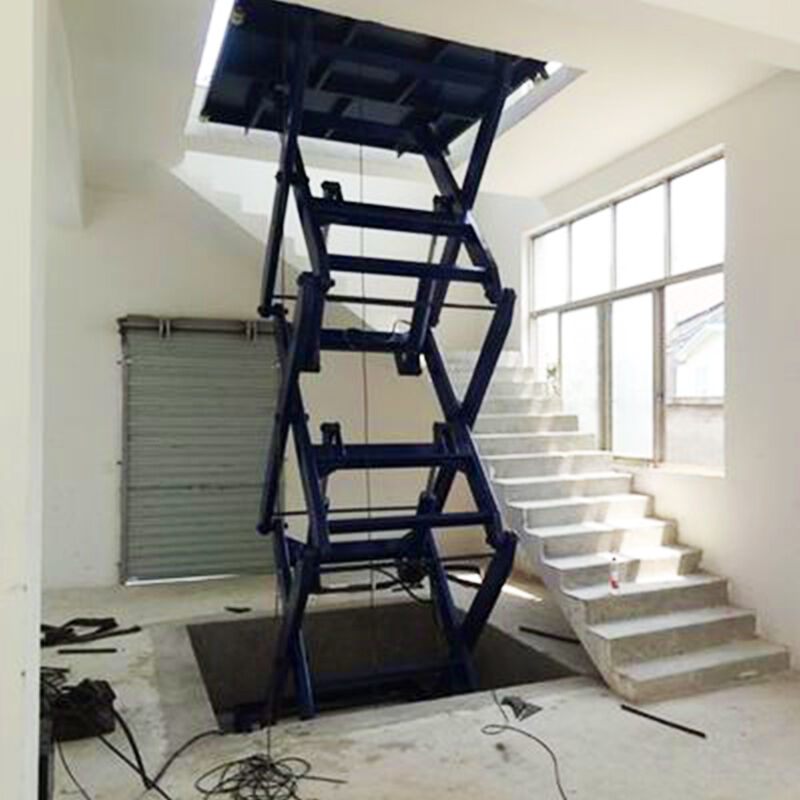
When evaluating lifting equipment for demanding industrial environments, a stationary scissor lift stands out as a powerful and reliable solution. Unlike mobile alternatives, a stationary scissor lift is engineered to remain fixed at a designated workstation, providing consistent vertical access for heavy loads and repetitive operations. For facilities that require dependable, high-capacity lifting day after day, the stationary scissor lift deserves serious consideration.
The short answer is yes — a stationary scissor lift is genuinely well-suited for heavy-duty industrial use, but only when selected and deployed correctly. Understanding the conditions under which a stationary scissor lift excels, the load capacities it can handle, and the safety standards it must meet will help industrial operators make fully informed procurement decisions. This article examines every critical dimension of the stationary scissor lift in the context of demanding industrial work.
Load Capacity and Structural Strength
How Much Weight Can a Stationary Scissor Lift Handle
One of the most important factors in evaluating a stationary scissor lift for heavy-duty use is its rated load capacity. Industrial-grade stationary scissor lift models are commonly built to support loads ranging from 1,000 kilograms up to 10,000 kilograms or more, depending on the platform size and scissor mechanism design. This makes the stationary scissor lift a practical choice for moving pallets, machinery components, vehicle parts, and other heavy industrial materials with confidence.
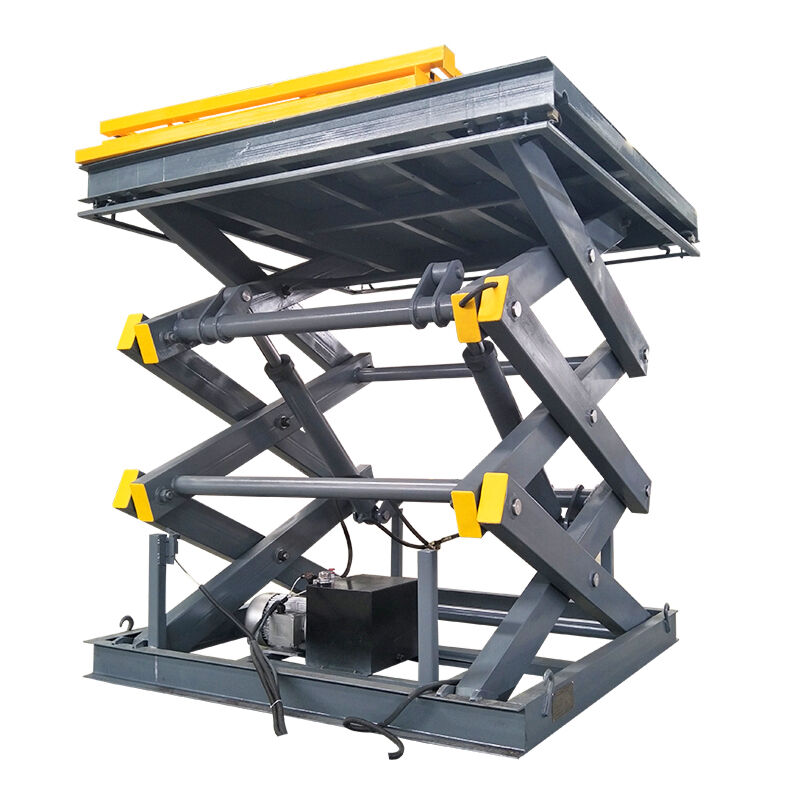
The structural integrity of a stationary scissor lift is typically achieved through heavy-gauge steel frames, reinforced scissor arms, and precision-welded joints. A well-engineered stationary scissor lift distributes weight evenly across the scissor mechanism, reducing stress concentration and extending service life. When a facility consistently handles loads at or near maximum capacity, the stationary scissor lift must be specified with an appropriate safety factor, typically 1.5 to 2 times the rated load, to ensure structural reliability over time.
Platform Size and Load Distribution
Beyond raw weight capacity, platform dimensions play a significant role in determining whether a stationary scissor lift is appropriate for a given task. A larger platform on a stationary scissor lift allows bulky or irregularly shaped loads to be positioned safely without risk of tipping or imbalance. Industrial operators should carefully match the platform dimensions of the stationary scissor lift to the actual footprint of the goods or equipment being lifted, ensuring stable load distribution at every lift height.
Safety Features Essential for Industrial Environments
Built-In Safety Mechanisms of a Stationary Scissor Lift
Safety is a non-negotiable priority when deploying a stationary scissor lift in a heavy-duty environment. A properly designed stationary scissor lift incorporates multiple layers of safety protection, including hydraulic safety valves that prevent uncontrolled descent in the event of a pressure loss. Anti-shear safety skirts around the platform perimeter of the stationary scissor lift protect workers from pinch points during lowering cycles. Overload sensors on an advanced stationary scissor lift will halt operation automatically when the load limit is exceeded, protecting both personnel and equipment.
Emergency stop controls are a standard feature on any industrial stationary scissor lift, allowing operators to halt all movement instantly when an unexpected hazard is detected. Mechanical safety legs or locking pins provide additional protection on a stationary scissor lift when maintenance work is being performed at elevated height. These combined safety systems make the stationary scissor lift one of the most secure fixed lifting solutions available in modern industrial facilities.
Compliance and Certification Standards
For a stationary scissor lift to be considered suitable for heavy-duty industrial use, it must comply with relevant national and international safety standards. Certifications such as CE marking in Europe or equivalent regional standards confirm that the stationary scissor lift has been independently tested for structural soundness, electrical safety, and operational reliability. Facility managers should always request full documentation when sourcing a stationary scissor lift to confirm that the unit meets all applicable regulatory requirements for the target operating environment.
Key Industrial Applications for a Stationary Scissor Lift
Where the Stationary Scissor Lift Performs Best
The stationary scissor lift is especially valuable in applications where lifting occurs repeatedly at a fixed location. Loading docks benefit greatly from a stationary scissor lift because it bridges the height gap between floor level and truck bed, enabling efficient pallet transfers without manual handling strain. Assembly lines in automotive, aerospace, and electronics manufacturing rely on the stationary scissor lift to position components at ergonomic working heights, reducing worker fatigue and improving production throughput.
Warehouses and distribution centers integrate the stationary scissor lift into mezzanine access points, allowing forklifts or workers to move goods between floor levels smoothly and safely. In maintenance workshops, a stationary scissor lift provides a stable platform for technicians working under heavy machinery or vehicles. The consistent positioning capability of the stationary scissor lift makes it far more dependable than mobile equipment in these fixed-station scenarios.
When a Stationary Scissor Lift May Not Be the Best Fit
While the stationary scissor lift excels in fixed-location applications, it is not the right choice for every situation. Operations that require lifting at multiple points across a large facility may find a mobile or self-propelled lift more practical than a stationary scissor lift. Additionally, if ceiling height restrictions prevent the stationary scissor lift from reaching full elevation, the platform height specifications must be carefully reviewed before installation. Understanding these limitations ensures that the stationary scissor lift is deployed only in scenarios where it genuinely outperforms alternatives.
FAQ
What is the typical load capacity of a stationary scissor lift for industrial use?
An industrial stationary scissor lift commonly supports loads from 1,000 kg to over 10,000 kg, depending on the model and platform size. Always verify the rated capacity and safety factor before selecting a stationary scissor lift for a specific heavy-duty application.
How does a stationary scissor lift differ from a mobile scissor lift?
A stationary scissor lift is permanently or semi-permanently fixed at a single workstation, offering higher load capacity and greater structural stability than most mobile units. A mobile scissor lift provides flexibility of movement but typically carries lower weight ratings than a heavy-duty stationary scissor lift.
What maintenance does a stationary scissor lift require in a heavy-duty setting?
A stationary scissor lift used in heavy-duty operations requires regular inspection of hydraulic fluid levels, cylinder seals, scissor arm pivot points, and safety valve function. Following the manufacturer-recommended maintenance schedule for the stationary scissor lift ensures long service life and consistent operational safety.