EN
EN


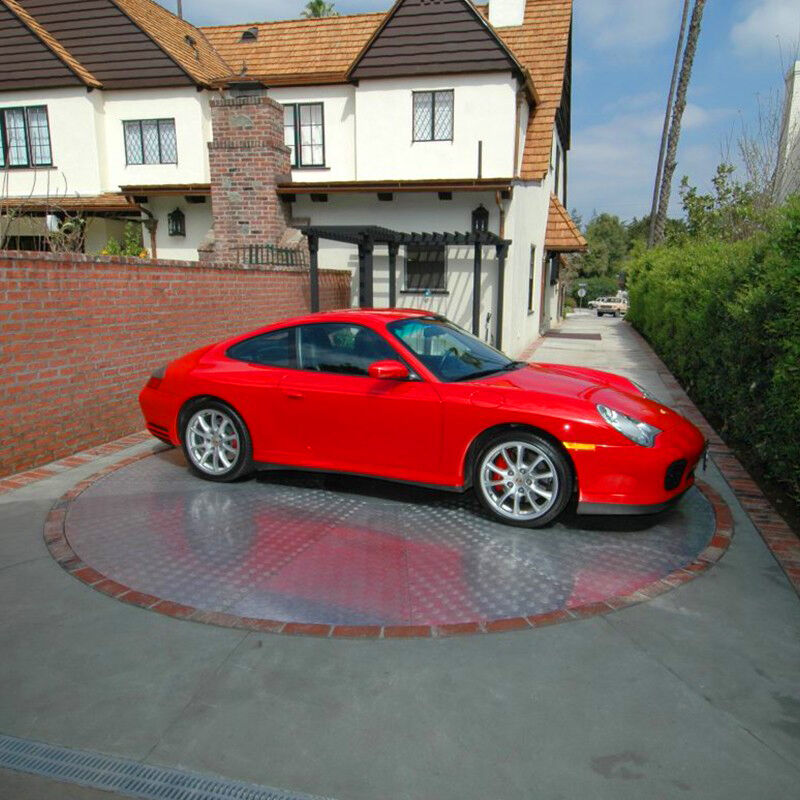
Urban environments and residential properties increasingly face the challenge of limited parking space, where traditional maneuvers become impractical or impossible. A car turntable with friction drive addresses this constraint by enabling vehicles to rotate in place, eliminating the need for complex reversing or multi-point turns. Unlike older chain-driven or hydraulic systems, friction drive technology uses direct surface contact between the platform and rotating mechanism, delivering smoother operation, reduced maintenance demands, and quieter performance. This mechanical innovation transforms how property owners, architects, and facility managers approach parking design in constrained environments, making previously unusable spaces functional and enhancing overall property value.
The friction drive mechanism operates through precisely engineered contact surfaces that transfer rotational force from a motor assembly to the turntable platform, allowing vehicles weighing several tons to rotate effortlessly within their own footprint. This article explains the specific ways friction drive turntables solve tight parking challenges, examining the mechanical advantages of this drive system, the spatial efficiency gains it provides, the practical installation considerations, and the long-term operational benefits that make it superior to alternative parking solutions in confined areas. Understanding these factors helps decision-makers select the most effective parking equipment for their specific spatial constraints and usage requirements.
Mechanical Advantages of Friction Drive Systems
Direct Force Transfer and Operational Smoothness
The friction drive system in a car turntable with friction drive operates through continuous surface contact between drive wheels and the underside of the rotating platform, creating a direct mechanical connection that eliminates the jerking motion common in chain-driven alternatives. This contact-based power transmission allows for infinitely variable speed control, enabling operators to adjust rotation speed according to specific needs, from slow positioning for precision parking to faster rotation for high-turnover commercial applications. The absence of rigid mechanical linkages means the system absorbs minor misalignments and load variations smoothly, reducing stress on both the drive components and the vehicle being rotated.
The drive wheels themselves are typically manufactured from high-friction composite materials that maintain consistent grip across varying temperatures and humidity levels, ensuring reliable operation in outdoor installations, underground garages, and climate-controlled showrooms alike. This material selection prevents slippage even when the platform carries maximum rated load, while the distributed contact area spreads wear evenly across the friction surface, extending component lifespan significantly compared to point-contact drive systems. The resulting motion quality is particularly important in luxury residential applications and automotive showrooms where smooth, vibration-free rotation protects vehicle finishes and enhances user experience.
Reduced Noise Profile and Urban Compatibility
Noise reduction represents a critical advantage of friction drive technology in residential and mixed-use developments where sound pollution affects property value and tenant satisfaction. A car turntable with friction drive generates substantially lower operational noise than hydraulic systems with pump units or chain drives with metal-on-metal contact points. The friction interface produces only a subdued rolling sound during rotation, typically measuring below 55 decibels at standard operating speeds, making it suitable for installation in basement garages beneath living spaces or in outdoor areas adjacent to windows and outdoor living areas.
This acoustic performance stems from the continuous elastic contact between drive wheels and platform surface, which dampens vibration transmission and eliminates the repetitive impact sounds characteristic of toothed gear systems or segmented drive mechanisms. The quiet operation extends to the motor assembly as well, where modern friction drive systems employ variable frequency drives that ramp speed smoothly rather than starting at full power, further minimizing noise spikes during activation and deceleration phases. For urban installations where noise ordinances restrict equipment operation during evening and early morning hours, the low sound signature of friction drive turntables provides operational flexibility that chain or cable systems cannot match.
Maintenance Simplicity and Component Accessibility
The mechanical simplicity of friction drive systems translates directly into reduced maintenance requirements and lower lifetime operating costs compared to hydraulic or complex gear-driven alternatives. A car turntable with friction drive contains fewer moving parts and requires no hydraulic fluid changes, seal replacements, or pressure system monitoring that hydraulic platforms demand. The primary maintenance activities consist of periodic inspection of friction wheel surfaces for wear, motor bearing lubrication on manufacturer-specified intervals, and occasional adjustment of drive wheel pressure to compensate for friction material compression over extended use.
Component accessibility in well-designed friction drive systems allows maintenance personnel to perform routine inspections and adjustments without excavating the installation or disassembling large portions of the mechanism, reducing both service time and associated labor costs. The drive assembly typically mounts in an accessible service compartment at the platform perimeter, where technicians can reach critical components without specialized lifting equipment or extensive disassembly procedures. This maintenance efficiency becomes particularly valuable in commercial applications where turntable downtime directly impacts parking capacity and revenue, as most routine service can be completed during off-peak hours without extended facility closures.
Spatial Efficiency and Layout Optimization
Elimination of Turning Radius Requirements
Traditional parking layouts must accommodate the turning radius of vehicles entering and exiting spaces, requiring driveway widths of 16 to 24 feet for standard passenger vehicles and even greater clearances for SUVs and trucks. A car turntable with friction drive eliminates this geometric constraint by allowing vehicles to enter straight into the parking area and rotate to the desired exit orientation without lateral movement. This capability reduces the required driveway width to just the vehicle track width plus minimal side clearance, often cutting necessary passage width by 40 to 60 percent compared to conventional parking configurations.
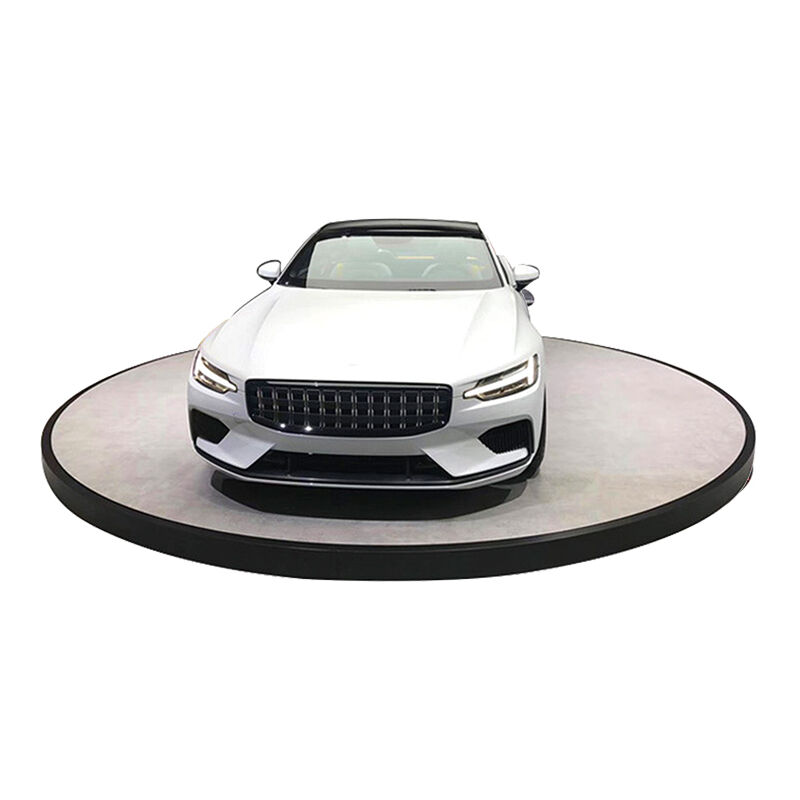
The space savings extend beyond driveway dimensions to the parking bay itself, as drivers no longer need angling room to position vehicles within marked spaces. Properties with front-in perpendicular parking can install turntables to enable forward exit without backing into traffic, improving safety while using the same footprint as traditional spaces. In residential driveways with limited street frontage, a single turntable installation can transform a property from requiring complex backing maneuvers onto busy streets to enabling safe forward exit in all conditions, a safety improvement particularly valuable for elderly residents or drivers with limited visibility.
Vertical Space Utilization in Multi-Level Facilities
Multi-level parking structures face the challenge of connecting floors through ramps that consume substantial footprint and impose grade limitations. While full automated parking systems address this through lifts, a car turntable with friction drive offers a hybrid solution for facilities with 2 to 4 levels, where turntables positioned at ramp intersections allow vehicles to rotate before ascending or descending, reducing the ramp length required to achieve necessary grade changes. This configuration particularly suits properties with irregular lot geometries where conventional helical ramps cannot fit efficiently.
The compact nature of friction drive mechanisms permits installation in facilities with limited floor-to-floor height, as the drive assembly and rotating platform typically require only 6 to 10 inches of vertical clearance below the finished parking surface. This shallow profile enables retrofit installations in existing structures where excavation depth is constrained by foundations, utilities, or water tables. The minimal vertical intrusion also preserves overhead clearance in basement garages, avoiding conflicts with mechanical systems, sprinkler piping, and electrical conduit that often complicate parking equipment installations in finished buildings.
Adaptive Configuration for Irregular Properties
Properties with unusual lot shapes, historic building constraints, or protected landscape features often cannot accommodate standard parking layouts that assume rectangular geometries and unrestricted circulation paths. A car turntable with friction drive provides adaptive capability that makes parking feasible on narrow lots, pie-shaped corner parcels, and properties with protected trees or heritage elements that cannot be removed. By concentrating the vehicle orientation function into a single compact device, turntables allow parking designers to route access drives along property boundaries or through narrow gaps that would be unusable for traditional two-way circulation.
This adaptability extends to phased development scenarios where property owners need parking solutions that can be relocated or reconfigured as site uses evolve. Modern friction drive turntables install on surface-mounted base plates rather than requiring deep foundation pits, allowing removal and reinstallation with minimal site disturbance. This modularity suits temporary installations for construction staging areas, event venues with seasonal parking demands, or residential properties where owners anticipate future expansion that will alter parking layouts. The ability to redeploy equipment preserves capital investment while providing flexibility that permanent paving and striping cannot offer.
Installation Considerations and Site Integration
Foundation Requirements and Load Distribution
The foundation design for a car turntable with friction drive must account for both static vehicle loads and the dynamic forces generated during rotation, particularly the lateral forces transmitted through the friction drive interface. Most installations require a reinforced concrete pad with minimum thickness of 8 to 12 inches, designed to distribute point loads from the drive assembly and central bearing across the underlying soil without differential settlement that would compromise levelness. The pad must achieve surface flatness within 1/8 inch across the platform diameter to ensure smooth rotation and prevent binding in the drive mechanism.
Soil conditions significantly influence foundation design, with expansive clays, high water tables, or frost-susceptible soils requiring additional measures such as deeper footings, drainage systems, or soil stabilization to maintain long-term platform alignment. In retrofit installations within existing structures, engineers must verify that floor slabs possess adequate load capacity and stiffness to support the concentrated loads at drive and bearing points, sometimes requiring supplemental reinforcement or load-spreading elements. The friction drive system itself helps moderate foundation demands compared to hydraulic systems, as it does not impose the shock loads associated with hydraulic pump cycling or the point stresses of hydraulic cylinder mounting points.
Electrical Integration and Control Systems
The electrical system for a car turntable with friction drive typically operates on standard single-phase or three-phase power at 208 to 480 volts, with total connected load ranging from 1.5 to 5 kilowatts depending on platform diameter and rotation speed requirements. Power consumption during operation remains modest, as the friction drive requires energy only to overcome rotational inertia and bearing friction rather than lifting vehicle weight as elevator-based systems do. This efficiency makes turntable installations feasible in locations with limited electrical service capacity, often avoiding the costly service upgrades that automated parking lifts necessitate.
Control system options range from simple keyed switches for residential applications to integrated access control systems with RFID readers, smartphone activation, and security camera integration for commercial installations. The variable frequency drives used in modern friction drive systems allow programming of acceleration profiles, maximum rotation speeds, and automatic positioning at preset orientations, enabling customized operation for different user types or time periods. Safety interlocks prevent operation when obstacles are detected on the platform, using sensors that integrate with the drive control to immediately halt rotation if a person or object enters the rotation zone, addressing liability concerns that facility managers face with mechanical equipment in public areas.
Weather Protection and Environmental Durability
Outdoor installations of car turntable with friction drive systems must withstand precipitation, temperature extremes, UV exposure, and chemical exposure from de-icing compounds and vehicle fluids without performance degradation or accelerated component wear. The platform surface typically features a slip-resistant coating with drainage provisions to prevent water accumulation that could cause hydroplaning during rotation or freeze into ice that jams the mechanism. Perimeter drains channel runoff away from the drive assembly and bearing housing, preventing water infiltration into sealed components where it could cause corrosion or lubrication contamination.
The drive mechanism itself receives protection through sealed enclosures with gasketed access covers that maintain IP65 or higher ingress protection ratings, preventing dust and water intrusion while allowing necessary ventilation to dissipate motor heat. Friction wheel materials resist degradation from ozone, petroleum products, and temperature cycling that would cause hardening or cracking in inferior compounds, maintaining consistent coefficient of friction across the operating temperature range from -20°F to 120°F typical of most continental climates. Corrosion-resistant coatings on structural steel components and stainless steel fasteners prevent rust staining of adjacent surfaces and eliminate the maintenance burden of periodic repainting that carbon steel installations require.
Operational Benefits and Performance Characteristics
User Experience and Accessibility Enhancement
The operational simplicity of a car turntable with friction drive removes parking anxiety for drivers who struggle with backing maneuvers or parallel parking, transforming challenging parking situations into straightforward pull-forward operations that require minimal skill. This accessibility benefit extends to elderly drivers, individuals with limited mobility who cannot turn their torso to check blind spots during reversing, and inexperienced drivers who lack confidence in tight maneuvering situations. By enabling forward entry and forward exit, turntables reduce accident risk and eliminate the curb damage, mirror strikes, and fender scrapes that commonly occur during difficult parking maneuvers.
The smooth, controlled rotation provided by friction drive systems enhances user confidence compared to jerky chain-driven alternatives, as vehicles turn at steady speed without sudden starts or stops that might alarm occupants or cause concern about damage to vehicle suspensions. Rotation speeds typically range from 2 to 6 RPM, completing a full 180-degree turn in 10 to 30 seconds depending on application requirements, fast enough to avoid tedious wait times but controlled enough to allow occupants to remain in the vehicle during rotation if desired. This predictable performance builds user trust and encourages consistent use rather than avoidance behaviors that reduce the value proposition of parking equipment investments.
Safety Improvements and Liability Reduction
Forward egress from parking positions eliminates the most dangerous aspect of tight parking situations: backing into traffic with limited visibility, a maneuver responsible for thousands of pedestrian injuries and vehicle collisions annually. A car turntable with friction drive allows drivers to exit parking areas with full forward visibility, eliminating blind zones and enabling normal traffic scanning behaviors that drivers employ when pulling forward. This safety enhancement proves particularly valuable in residential driveways that exit onto busy streets, commercial lots with pedestrian traffic, and any location where children or pets might be present in vehicle paths.
The mechanical safeguards inherent in modern friction drive systems further reduce liability exposure for property owners and facility operators. Weight sensors detect when vehicles have fully mounted the platform before allowing rotation, preventing operation with partially positioned vehicles that could fall off during movement. Perimeter safety edges immediately stop rotation if contacted by any object, while photocell arrays create detection zones around the platform that halt operation before contact occurs. These layered safety features meet insurance requirements for commercial installations while providing peace of mind for residential users who prioritize family safety over operational speed.
Long-Term Value and Return on Investment
The capital investment in a car turntable with friction drive generates returns through multiple value channels beyond the immediate parking functionality. Residential properties gain marketability through enhanced usability, with real estate professionals noting that difficult parking situations represent significant purchase barriers for prospective buyers, particularly in urban markets where buyers have multiple options. The installation of turntable systems removes this barrier, often enabling property sales at higher price points than comparable properties without parking solutions, with the turntable investment frequently recovering 150 to 300 percent of installed cost in property value appreciation.
Commercial properties benefit from increased parking density and improved traffic flow, translating into higher rental income from additional spaces and reduced congestion that improves tenant satisfaction. The 25 to 30-year service life typical of quality friction drive installations spreads capital costs across extended operating periods, while the minimal maintenance requirements keep annual operating expenses below 2 percent of initial investment. Energy costs remain negligible compared to hydraulic systems or automated parking structures, as the friction drive system consumes power only during actual rotation cycles rather than maintaining constant hydraulic pressure or climate control for enclosed mechanisms. These factors combine to produce lifecycle cost profiles that consistently outperform alternative parking solutions in constrained space applications.
FAQ
What weight capacity should I specify for residential versus commercial applications?
Residential installations typically require turntables rated for 4,000 to 6,000 pounds to accommodate standard passenger vehicles, SUVs, and light trucks, with 5,000-pound capacity providing adequate margin for most family vehicle fleets. Commercial applications, vehicle showrooms, or properties where exotic cars or modified vehicles might be parked should specify 8,000 to 10,000-pound capacity to ensure safe operation with high-end luxury vehicles, full-size SUVs, and specialty vehicles without approaching weight limits that compromise safety factors. The cost differential between weight ratings is typically 15 to 25 percent, making higher capacity specifications cost-effective insurance against future vehicle trends and unexpected use cases.
How does installation timeframe differ between new construction and retrofit projects?
New construction installations integrate turntable foundations into initial site work, allowing the concrete pad to cure during building construction and enabling single-visit equipment installation once the site is ready, typically completing within 2 to 3 days from equipment delivery to operational status. Retrofit projects require 1 to 2 weeks for saw-cutting existing pavement, excavating for foundations, forming and pouring concrete, allowing adequate cure time, and then installing equipment, with total project duration extending to 3 to 4 weeks when including utility relocation and site restoration. The disruption can be minimized by scheduling work during low-occupancy periods and maintaining temporary parking access through phased construction approaches.
Can friction drive turntables operate reliably in regions with harsh winter conditions?
Friction drive systems demonstrate excellent cold-weather performance when properly specified with components rated for local climate extremes, including cold-temperature motor lubricants, friction materials that maintain grip characteristics below freezing, and heating elements in control enclosures to prevent condensation and component failure. The key winter challenge involves ice formation on the platform surface, addressed through heated platform options, regular snow clearing protocols, and drainage designs that prevent meltwater pooling and refreezing. Properties in regions with sustained below-freezing temperatures should specify outdoor-rated systems with weatherproof enclosures and consider seasonal maintenance schedules that address the accelerated wear that freeze-thaw cycles impose on all outdoor equipment.
What clearances are required around the turntable for safe operation?
Safety regulations and manufacturer guidelines typically specify minimum 18 to 24-inch clearance between the platform edge and any fixed obstruction such as walls, columns, or permanent landscape features, creating a safety zone that prevents vehicles from striking obstacles during rotation and provides space for required safety sensors and warning markings. Overhead clearance should provide minimum 7 to 8 feet from the platform surface to any beams, ductwork, or ceiling elements to accommodate tall vehicles and allow for driver head clearance when occupants remain in vehicles during rotation. These clearances can be reduced in specific locations through engineered safety barriers or enhanced sensor arrays, but such modifications require review by qualified professionals to ensure regulatory compliance and adequate risk mitigation.
Table of Contents
- Mechanical Advantages of Friction Drive Systems
- Spatial Efficiency and Layout Optimization
- Installation Considerations and Site Integration
- Operational Benefits and Performance Characteristics
-
FAQ
- What weight capacity should I specify for residential versus commercial applications?
- How does installation timeframe differ between new construction and retrofit projects?
- Can friction drive turntables operate reliably in regions with harsh winter conditions?
- What clearances are required around the turntable for safe operation?