EN
EN


Commercial parking infrastructure and B2B property development projects face increasing pressure to maximize spatial efficiency while delivering premium user experiences. As urban real estate costs escalate and building footprints shrink, developers and facility managers are exploring innovative solutions that transform how vehicles navigate constrained environments. Among these solutions, the car turntable has emerged as a compelling option for projects ranging from luxury residential towers to corporate office complexes, automotive showrooms, and mixed-use developments. Yet despite growing interest, many decision-makers remain uncertain whether this technology aligns with the operational demands, financial constraints, and long-term viability requirements of commercial and B2B applications.
The suitability of a car turntable for commercial parking and business-to-business projects depends on multiple interrelated factors including spatial constraints, traffic volume patterns, operational cost structures, maintenance requirements, and the specific value proposition required by end users. Unlike residential applications where convenience and luxury dominate decision criteria, commercial deployments must satisfy rigorous financial performance benchmarks, accommodate diverse vehicle types, support higher utilization rates, and integrate seamlessly with existing access control and management systems. This article examines the practical considerations, operational realities, and decision frameworks that determine whether a car turntable represents a viable investment for commercial parking facilities and B2B property projects.
Understanding Commercial Parking Requirements and Operational Context
Spatial Efficiency Demands in Commercial Environments
Commercial parking facilities operate under fundamentally different spatial constraints than residential garages. Office buildings, retail centers, and hospitality properties must accommodate fluctuating daily vehicle volumes while maintaining accessible circulation paths for emergency vehicles, service providers, and delivery operations. The car turntable addresses a specific subset of these challenges by eliminating the need for traditional turning radii in confined entrance zones, underground parking levels, or rooftop facilities where conventional ramp systems prove impractical or prohibitively expensive.
In dense urban districts where property acquisition costs exceed thousands of dollars per square foot, every eliminated ramp curve or turning lane directly impacts project feasibility. A properly specified car turntable can recover between 200 and 600 square feet of usable space compared to conventional turning layouts, translating to additional parking positions or leasable commercial area. For B2B property developers constructing speculative office buildings or mixed-use projects, this spatial efficiency improvement can meaningfully affect net operating income projections and capitalization rates that determine project financing terms.
Traffic Volume and Throughput Considerations
Unlike single-family residential installations where a car turntable might rotate vehicles only a few times daily, commercial applications must support substantially higher utilization frequencies. Corporate office parking during morning arrival peaks, hotel valet operations during conference events, or automotive dealership display rotations all generate repeated operational cycles that stress mechanical systems and require robust engineering specifications. The friction-based drive systems used in many commercial car turntable installations must demonstrate cycle durability exceeding 50,000 rotations annually while maintaining positioning accuracy and operational safety.
Throughput capacity becomes particularly critical in valet-assisted parking operations where the car turntable functions as an active component of the service delivery sequence rather than merely a convenience feature. In high-end hospitality or corporate campus applications, a single turntable might need to complete full rotation cycles every two to three minutes during peak periods, requiring motorized drive systems with fast rotation speeds typically between 30 and 60 seconds per complete turn, along with quick vehicle loading and unloading protocols that minimize wait times for arriving guests or employees.
Diverse Vehicle Type Accommodation
Commercial parking facilities must accommodate a wider range of vehicle types and weights than residential applications. While a home garage might exclusively serve passenger sedans and compact SUVs, commercial installations regularly handle full-size trucks, luxury vehicles with extended wheelbases, delivery vans, and occasionally specialty vehicles. The car turntable specified for commercial use must therefore feature weight capacity ratings typically ranging from 5,000 to 8,000 pounds, platform dimensions accommodating vehicles up to 20 feet in length, and surface materials that prevent tire slippage across varying tread patterns and tire conditions.
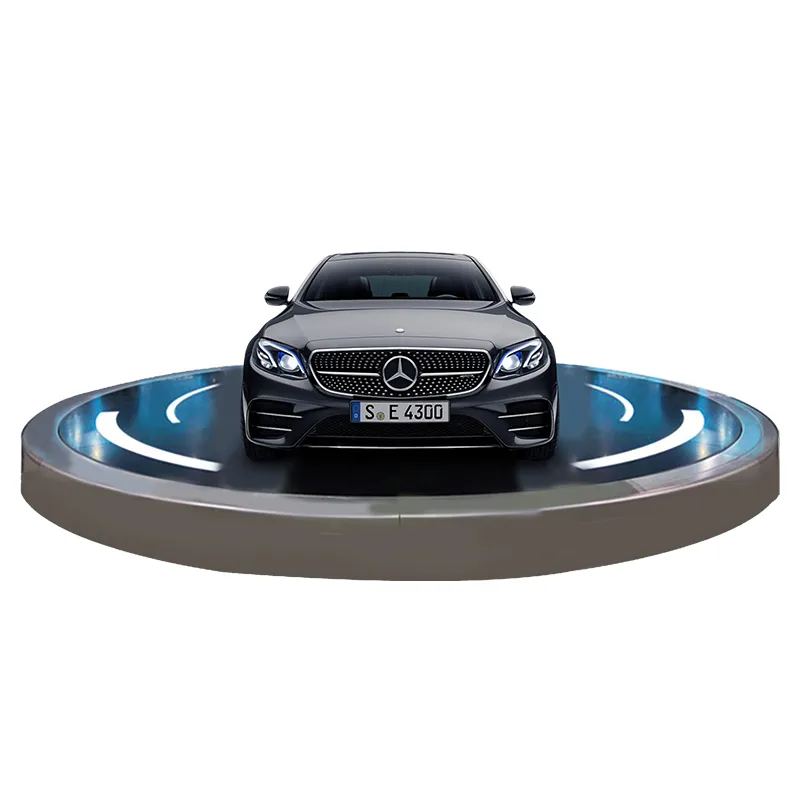
This requirement for universal vehicle compatibility introduces engineering challenges that affect both initial capital costs and ongoing maintenance protocols. The structural deck must distribute concentrated wheel loads across the rotating mechanism without inducing excessive deflection or accelerated wear on drive components. Surface coatings must balance slip resistance for safe vehicle positioning with low friction coefficients that minimize motor loads during rotation cycles. For B2B projects serving corporate fleets or commercial tenants, the ability to reliably handle diverse vehicle types without operational restrictions or safety concerns directly impacts tenant satisfaction and lease renewal decisions.
Financial Viability and Total Cost of Ownership Analysis
Capital Investment Requirements and Project Budget Integration
The initial acquisition and installation cost of a commercial-grade car turntable typically ranges from $15,000 to $60,000 depending on platform diameter, weight capacity, automation level, and site preparation requirements. This capital outlay must be evaluated within the broader context of total parking facility construction costs, which for urban underground garages can exceed $50,000 per parking space when accounting for excavation, structural systems, mechanical ventilation, and fire protection infrastructure. When a car turntable enables the elimination of one or more parking levels or allows construction on a lot previously considered too constrained for conventional parking design, the relative cost contribution becomes modest compared to the enabled project value.
For B2B property developers conducting feasibility analysis, the car turntable investment must demonstrate clear return on investment through quantifiable benefits such as increased parking capacity, enhanced property marketability, premium lease rate justification, or reduced construction costs through simplified structural design. In luxury office towers or boutique hotel projects where the car turntable serves as both functional infrastructure and architectural statement, the capital cost can be positioned as a value-added amenity that differentiates the property in competitive leasing markets, potentially justifying rental premiums of $2 to $5 per square foot annually across affected tenant spaces.
Operating Cost Structures and Maintenance Requirements
Beyond initial capital investment, commercial car turntable installations generate ongoing operating costs through electrical consumption, preventive maintenance schedules, and periodic component replacement. Modern motorized turntable systems typically consume between 1.5 and 3.0 kilowatts during rotation cycles, translating to annual electricity costs of $200 to $800 depending on local utility rates and daily utilization frequency. In continuously operated valet parking applications, these energy costs become material line items in facility operating budgets that must be compared against alternative parking circulation solutions.
Maintenance requirements for commercial car turntable installations include quarterly lubrication of drive mechanisms, semi-annual inspection of electrical controls and safety systems, annual load testing of structural components, and periodic replacement of wear surfaces typically every three to five years depending on traffic volume. Comprehensive maintenance contracts from qualified service providers typically cost between $1,500 and $4,000 annually, representing a modest but non-trivial operating expense that B2B property owners must incorporate into long-term financial projections. The reliability and longevity of the chosen car turntable system directly impacts total cost of ownership, with premium friction-based drive systems demonstrating superior durability compared to lower-cost alternatives that may require more frequent repairs.
Lifecycle Value and Asset Management Considerations
Commercial property investors and B2B facility operators evaluate infrastructure investments through lifecycle value frameworks that extend 15 to 30 years beyond initial installation. A properly engineered car turntable system should deliver reliable operation throughout this extended timeframe with predictable maintenance interventions and component replacements that preserve functionality without requiring complete system removal. The modular design of quality turntable systems allows progressive component upgrades as drive technology advances or as operational requirements evolve, protecting the initial capital investment while maintaining competitive facility capabilities.
The residual value of a car turntable installation at property disposition or refinancing events depends heavily on system condition, maintenance history documentation, and compatibility with contemporary building codes and accessibility standards. Well-maintained commercial car turntable installations can enhance property valuations by demonstrating innovative space utilization and premium tenant amenities, particularly in constrained urban locations where parking efficiency directly impacts achievable development density. For B2B developers constructing build-to-suit facilities or speculative commercial projects, the car turntable can represent a value-stable improvement that maintains appeal across multiple ownership cycles and tenant generations.
Technical Integration with Commercial Building Systems
Access Control and Security System Coordination
Commercial parking facilities require sophisticated access control infrastructure that manages tenant permissions, validates visitor credentials, tracks vehicle entry and exit events, and integrates with building security monitoring systems. The car turntable must coordinate seamlessly with these access control platforms through compatible communication protocols, position sensors that confirm complete rotation cycles before releasing vehicles, and safety interlocks that prevent rotation when unauthorized access attempts occur. Modern commercial-grade turntable systems incorporate programmable logic controllers that interface with standard building automation protocols including BACnet, Modbus, or proprietary security system APIs.
In B2B corporate campus environments where parking access correlates with employee badge systems and visitor management platforms, the car turntable becomes an integrated component of comprehensive facility security architecture rather than a standalone mechanical device. The system must log rotation events with timestamp and user identification data, provide real-time status reporting to central monitoring stations, and support remote diagnostic access for maintenance providers. This level of technical integration requires careful specification during design phases and ongoing coordination between the car turntable supplier, security system integrator, and building management technology vendors.
Fire Safety and Emergency Access Compliance
Commercial parking facilities must satisfy stringent fire safety codes that govern emergency vehicle access, evacuation routes, and fire suppression system deployment. The car turntable installation cannot obstruct required fire department access lanes, must include fail-safe mechanisms that allow manual rotation during power failures, and should incorporate emergency override controls accessible to first responders. Local building codes and fire marshals typically require detailed operational documentation, periodic safety inspections, and demonstration that the car turntable does not impede emergency egress or rescue operations.
For underground parking facilities or enclosed garage structures, the car turntable mechanical room and control systems must comply with electrical code requirements for hazardous locations due to potential gasoline vapor accumulation. This necessitates explosion-proof enclosures for control panels, sealed motor housings, and ventilation systems that maintain air quality standards throughout the turntable operating zone. B2B property developers must budget for these enhanced safety specifications and coordinate car turntable installation with fire protection engineering consultants to ensure comprehensive code compliance that satisfies authority having jurisdiction reviews during permitting and certificate of occupancy processes.
Structural Loading and Foundation Engineering
The installation of a commercial car turntable introduces concentrated structural loads that must be carefully evaluated within the context of existing building framing systems or integrated into new construction structural design. A typical commercial car turntable installation generates point loads ranging from 12,000 to 20,000 pounds when supporting a fully loaded vehicle, requiring reinforced concrete foundations, structural steel support frames, or specialized mounting systems that distribute these forces into adjacent structural members without inducing excessive deflection or long-term settlement.
In retrofit applications where a car turntable is added to existing commercial parking structures, structural engineers must evaluate the capacity of existing floor slabs, verify adequate shear and moment capacity around mounting locations, and potentially design supplemental reinforcement systems that transfer loads to primary structural columns. These engineering requirements add cost and complexity to commercial car turntable projects but are essential for ensuring long-term structural integrity and occupant safety. B2B developers should engage structural consultants early in feasibility studies to identify potential installation limitations and budget appropriately for foundation preparation work that may significantly exceed the turntable equipment cost itself.
Operational Suitability Across Commercial Application Types
Corporate Office and Business Park Environments
Corporate office developments utilize car turntable systems primarily to optimize parking efficiency in constrained sites or to create distinctive arrival experiences for Class A properties targeting premium tenants. In executive parking areas or reserved spaces for C-suite occupants, the car turntable provides convenient vehicle orientation that eliminates backing maneuvers and enhances the perceived exclusivity of dedicated parking privileges. The relatively predictable traffic patterns in office environments, with concentrated morning arrival and evening departure peaks, align well with commercial car turntable operational capabilities provided the system is specified with adequate throughput capacity for the anticipated user population.
For business park developments serving multiple corporate tenants, the car turntable can function as a shared amenity that differentiates the property in competitive office markets. The installation typically occupies prominent locations near main building entrances where the rotating platform serves as both functional infrastructure and architectural feature. Property managers must establish clear operational protocols governing turntable access, implement reservation systems for peak-hour usage if necessary, and maintain comprehensive maintenance programs that ensure consistent availability. The success of car turntable installations in corporate environments depends heavily on tenant education, clear signage, and responsive service when operational issues arise.
Hospitality and Luxury Hotel Applications
Luxury hotels and boutique hospitality properties represent ideal commercial applications for car turntable systems, particularly in valet-assisted parking operations where vehicle presentation and guest experience significantly influence property reputation and competitive positioning. The car turntable enables efficient vehicle retrieval in constrained porte-cochère areas, eliminates the need for valet staff to perform complex backing maneuvers in view of arriving guests, and creates distinctive arrival and departure sequences that reinforce premium service positioning. High-end properties in markets such as New York, Miami, or Los Angeles have successfully integrated car turntable systems as signature amenities that generate social media attention and word-of-mouth marketing value.
The operational demands of hospitality car turntable installations differ substantially from corporate office applications due to higher daily cycle counts, exposure to weather elements in uncovered installations, and the need for flawless operation during high-visibility events such as weddings, conferences, or VIP guest arrivals. Hotel operators must invest in comprehensive staff training programs that ensure valet teams understand proper vehicle positioning, weight distribution requirements, and emergency procedures. The car turntable must deliver consistent sub-60-second rotation cycles to avoid bottlenecks during peak check-in periods while maintaining whisper-quiet operation that preserves the refined ambiance expected in luxury hospitality environments.
Automotive Retail and Showroom Environments
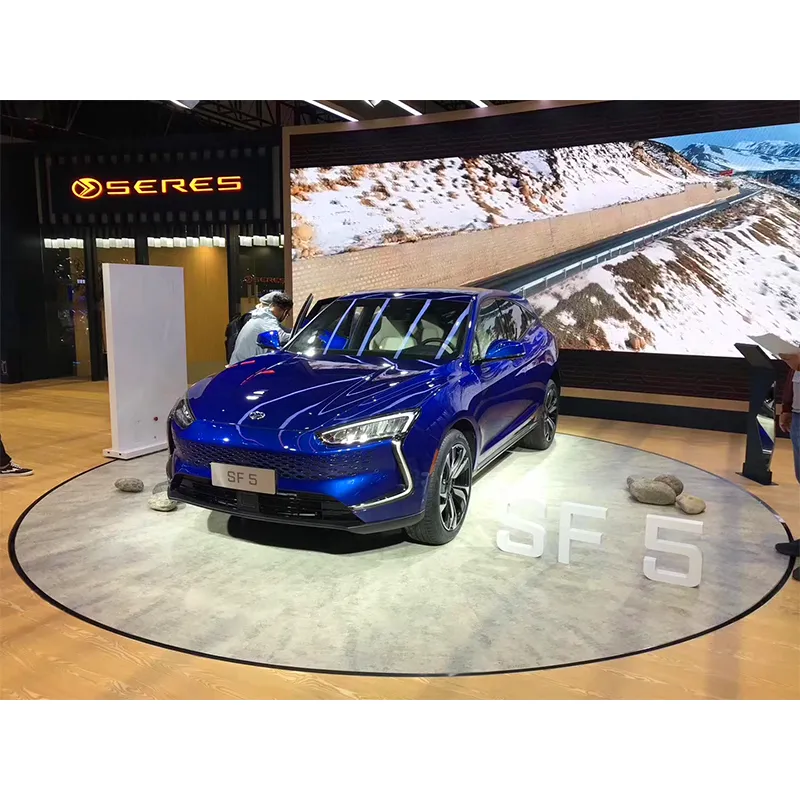
Automotive dealerships and specialty vehicle retailers utilize car turntable systems for showroom display applications where continuous rotation showcases vehicle design details and attracts street-level attention from passing pedestrians and motorists. These commercial installations prioritize smooth, slow rotation speeds typically ranging from three to eight minutes per complete revolution, dramatic lighting integration that enhances vehicle presentation, and robust construction that withstands continuous 24-hour operation over extended periods. The car turntable becomes a marketing tool that generates measurable increases in showroom traffic and enhances brand perception for luxury and exotic vehicle retailers.
In addition to static display functions, automotive retailers employ car turntable systems to facilitate efficient vehicle movement within constrained showroom layouts, enable photography and videography from multiple angles during vehicle preparation, and create memorable delivery experiences for customers taking possession of new vehicles. The commercial viability of car turntable installations in retail automotive contexts depends on quantifiable impacts to sales conversion rates, average transaction values, and customer satisfaction scores. Dealers report that distinctive vehicle presentation features including turntable displays contribute to premium pricing power and reduced sales cycle duration, particularly for high-value inventory where differentiation from mass-market competitors justifies significant investment in showroom infrastructure.
Risk Factors and Limitation Awareness for B2B Decision Making
Operational Limitations and Use Case Boundaries
Despite compelling benefits in appropriate applications, commercial car turntable installations face operational limitations that B2B decision makers must carefully evaluate during feasibility analysis. The technology performs optimally in low-to-moderate traffic volume scenarios where rotation cycles can be completed without creating vehicle queuing or access delays. In extremely high-volume parking facilities serving thousands of daily vehicle movements, such as airport economy lots or downtown parking garages with rapid turnover, the sequential nature of car turntable operation creates throughput bottlenecks that conventional circulation designs handle more efficiently.
Weather exposure represents another significant limitation for commercial car turntable installations in uncovered applications. Ice accumulation, standing water drainage, and debris management become ongoing operational challenges that require dedicated maintenance attention and may periodically force system shutdowns during severe weather events. B2B property operators in northern climates must implement snow removal protocols, install drainage systems that prevent ice formation on the rotating platform, and potentially specify heated turntable surfaces that maintain operational availability throughout winter months. These weather-related considerations add both capital cost and operational complexity that may render car turntable solutions less attractive compared to conventional parking designs in climate-challenged locations.
Liability and Insurance Considerations
Commercial property owners and B2B facility operators must carefully evaluate liability exposure associated with car turntable installations, particularly in valet-assisted applications where staff operate the system on behalf of vehicle owners. Comprehensive general liability insurance policies should explicitly cover turntable-related incidents including vehicle damage during rotation, personal injury from improper platform use, and property damage from mechanical failures. Insurance underwriters typically require detailed operational protocols, staff training documentation, and regular safety inspections as conditions for providing coverage at standard premium rates.
The car turntable installation must incorporate multiple layers of safety systems including motion sensors that detect pedestrians or obstacles before initiating rotation, emergency stop controls accessible from multiple locations, audible and visual warnings during operation, and fail-safe mechanisms that prevent platform movement when vehicles are improperly positioned. Commercial installations should meet or exceed industry safety standards such as those established by the American National Standards Institute for powered industrial equipment, and undergo third-party safety certifications that demonstrate compliance with applicable mechanical and electrical codes. B2B decision makers should require comprehensive warranty coverage, professional liability insurance from the turntable manufacturer, and clear delineation of maintenance responsibilities that protect the property owner from liability claims arising from equipment malfunction or improper service.
Technology Obsolescence and Long-Term Support Availability
Commercial infrastructure investments require confidence in long-term parts availability, technical support continuity, and compatibility with evolving building systems and code requirements. The car turntable market includes both established manufacturers with decades of operational history and newer entrants offering innovative features at competitive price points. B2B property developers must evaluate supplier financial stability, parts inventory commitment, and geographic service coverage when selecting car turntable systems for commercial projects. The risk of orphaned equipment with unavailable replacement parts or discontinued technical support represents a significant concern for property assets with 30-year or longer operational horizons.
As building automation systems migrate toward Internet of Things connectivity, cloud-based monitoring, and predictive maintenance analytics, commercial car turntable installations must demonstrate upgrade pathways that incorporate these emerging capabilities without requiring complete equipment replacement. Forward-thinking manufacturers design turntable control systems with modular electronics that accommodate software updates, communication protocol additions, and sensor technology improvements as these capabilities mature. B2B facility operators should prioritize car turntable suppliers that demonstrate commitment to backward compatibility, offer technology refresh programs for installed equipment, and maintain active product development pipelines that ensure contemporary capabilities throughout the asset lifecycle.
FAQ
What is the typical lifespan of a commercial car turntable installation?
A properly specified and maintained commercial car turntable system typically delivers 20 to 30 years of reliable operation before requiring major component replacement or system upgrade. The structural platform and foundation elements often outlast the mechanical drive systems, which may require refurbishment or replacement every 10 to 15 years depending on utilization intensity and maintenance quality. Premium friction-based drive systems demonstrate superior longevity compared to chain or cable-driven alternatives, particularly in high-cycle commercial applications. Comprehensive maintenance contracts that include regular lubrication, alignment checks, and proactive component replacement significantly extend operational lifespan and reduce the likelihood of catastrophic failures that necessitate emergency repairs or prolonged downtime.
How does a car turntable affect commercial property insurance premiums?
The impact of car turntable installations on commercial property insurance premiums varies depending on insurer underwriting criteria, facility type, and operational protocols. Many insurers treat properly engineered and maintained car turntable systems as neutral factors that do not materially affect premium calculations for commercial parking facilities. However, installations that lack comprehensive safety systems, documented maintenance programs, or operator training protocols may trigger premium increases ranging from 2% to 8% of the parking facility portion of overall property insurance costs. Property owners can mitigate insurance impacts by providing insurers with detailed safety documentation, third-party certification reports, maintenance contracts from qualified service providers, and operational procedures that demonstrate risk management commitment. Some insurers offer premium credits for car turntable installations that reduce vehicle circulation congestion and lower accident frequency within parking facilities.
Can existing commercial parking structures be retrofitted with car turntable systems?
Retrofit installation of car turntable systems in existing commercial parking structures is technically feasible but requires comprehensive structural evaluation, potential reinforcement of mounting locations, and careful coordination with ongoing facility operations. Structural engineers must verify that existing floor slabs possess adequate capacity to support concentrated turntable loads, assess whether foundation systems can accommodate additional dead load without excessive settlement, and design load transfer mechanisms that distribute forces into primary structural members. Retrofit projects typically incur costs 30% to 60% higher than new construction installations due to demolition requirements, temporary support systems during installation, accelerated construction schedules that minimize operational disruption, and potential upgrades to electrical and fire protection systems serving the turntable location. Despite these challenges, numerous successful retrofit projects demonstrate that car turntable technology can be integrated into existing commercial facilities where spatial constraints, tenant demands, or property repositioning strategies justify the investment.
What maintenance expertise is required for commercial car turntable operations?
Commercial car turntable systems require maintenance expertise spanning mechanical, electrical, and structural disciplines. Routine preventive maintenance tasks including lubrication, cleaning, and basic adjustments can be performed by facility maintenance staff with appropriate training and manufacturer-provided documentation. However, more complex service requirements such as drive system overhaul, control panel diagnostics, structural inspection, and load testing typically necessitate engagement of specialized service providers with specific car turntable experience and manufacturer certification. Many commercial property owners establish annual maintenance contracts with qualified service companies that provide scheduled inspections, emergency repair response, parts inventory access, and technical support for facility staff. The maintenance complexity and required expertise level correlates with turntable system sophistication, with fully automated installations featuring remote monitoring and predictive maintenance capabilities requiring less frequent on-site intervention compared to basic manual or semi-automated systems that depend more heavily on operator skill and routine inspection protocols.
Table of Contents
- Understanding Commercial Parking Requirements and Operational Context
- Financial Viability and Total Cost of Ownership Analysis
- Technical Integration with Commercial Building Systems
- Operational Suitability Across Commercial Application Types
- Risk Factors and Limitation Awareness for B2B Decision Making
-
FAQ
- What is the typical lifespan of a commercial car turntable installation?
- How does a car turntable affect commercial property insurance premiums?
- Can existing commercial parking structures be retrofitted with car turntable systems?
- What maintenance expertise is required for commercial car turntable operations?