EN
EN


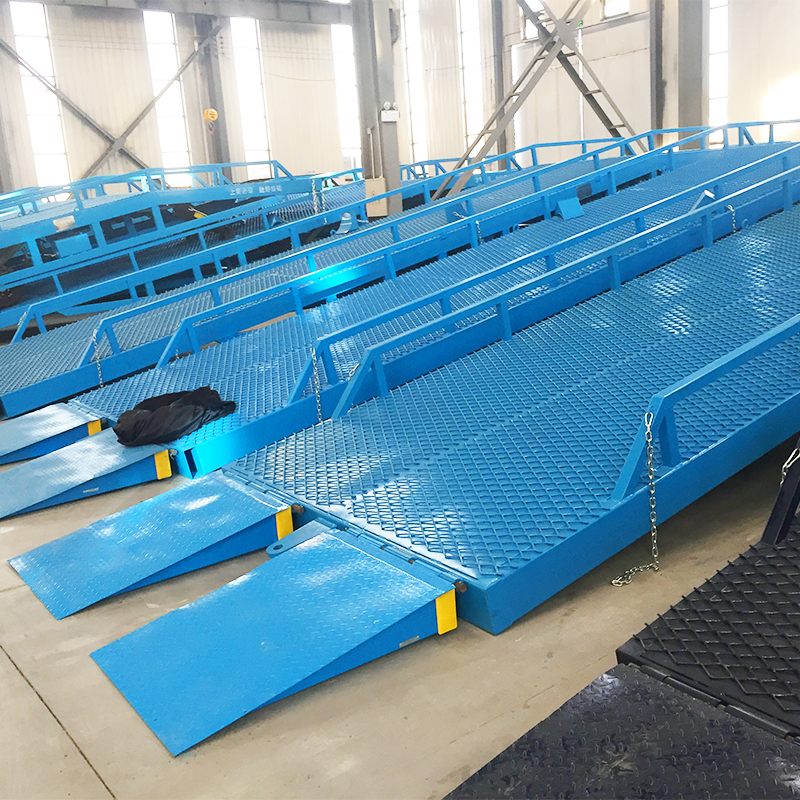
Modern warehousing and logistics operations rarely follow a single, predictable pattern. Facilities must handle varying vehicle heights, shifting delivery schedules, and locations that simply do not have permanent loading infrastructure. In these demanding environments, dock ramps have become one of the most practical and widely adopted solutions for bridging the gap between ground level and vehicle beds. Without dock ramps, countless loading scenarios would require costly structural modifications or force operations to rely on inefficient manual handling methods.
The question of why dock ramps are essential comes down to one core reality: not every facility can afford fixed loading bays, and not every operation takes place at a building with built-in dock infrastructure. Dock ramps solve this challenge by delivering adjustable, repositionable loading access wherever it is needed. As supply chains grow more complex and delivery points multiply, understanding the strategic value of dock ramps becomes critical for warehouse managers, logistics planners, and facility operators alike.
The Operational Case for Dock Ramps Without Fixed Infrastructure
Bridging Height Differences Across Any Location
One of the primary reasons dock ramps are indispensable is their ability to compensate for height mismatches between the floor level and the cargo bed of a truck or trailer. Fixed loading docks are engineered to serve a specific vehicle height range, but dock ramps can be adjusted or repositioned to accommodate different vehicle types. Whether a facility receives flatbed trucks, standard box vans, or high-clearance trailers, dock ramps provide the right angle of approach for safe and efficient cargo transfer. This adaptability is something rigid infrastructure simply cannot match.
Dock ramps eliminate the need for operators to improvise dangerous workarounds when vehicle heights vary. Without dock ramps on site, workers often resort to manual lifting, makeshift platforms, or unstable ramp substitutes that increase injury risk. Facilities that invest in proper dock ramps see measurable improvements in both loading speed and workplace safety, making dock ramps a sound operational and risk-management decision.
Supporting Temporary and Remote Loading Points
Not all loading activity happens at a main warehouse. Construction sites, event venues, temporary distribution hubs, and outdoor storage yards all require reliable loading solutions without the possibility of fixed bay construction. Dock ramps fill this gap by providing professional-grade loading access that can be moved and redeployed as operational needs change. A single set of dock ramps can serve multiple locations across a facility's network, delivering significantly higher utilization value than a permanent fixed structure that serves only one point.
How Dock Ramps Enhance Operational Flexibility
Adapting to Variable Traffic Volumes and Scheduling Demands
Fixed loading bays create bottlenecks when vehicle traffic spikes during peak periods. Dock ramps provide a scalable alternative because additional dock ramps can be deployed quickly to expand loading capacity when demand surges. During slower periods, dock ramps can be stored efficiently, freeing up yard space and reducing infrastructure maintenance costs. This scalability makes dock ramps particularly valuable for seasonal operations, third-party logistics providers, and e-commerce fulfillment centers that experience large fluctuations in inbound and outbound shipment volumes.
Dock ramps also support flexible scheduling by allowing cargo transfers to happen at any ground-level location without requiring vehicles to queue at a limited number of fixed bays. When dock ramps are available throughout a facility's yard, multiple loading and unloading activities can run in parallel. This parallel processing capability directly reduces vehicle dwell times and improves the overall throughput of a distribution operation.
Enabling Forklift and Pallet Jack Access Across Vehicles
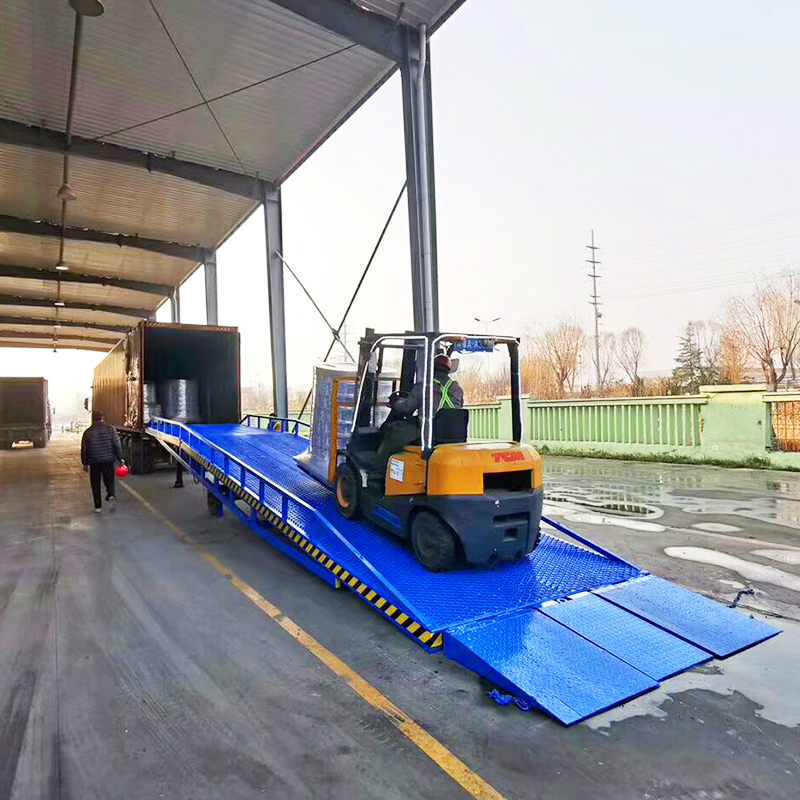
Mechanical handling equipment such as forklifts and powered pallet jacks requires a stable, rated ramp surface to transition between the ground and the vehicle cargo area. Dock ramps are specifically engineered to bear these loads safely, with weight ratings that accommodate heavy industrial equipment. By using dock ramps, operators can run forklifts directly into trailers without manual lifting, dramatically cutting loading and unloading cycle times. Dock ramps designed for this purpose typically feature anti-slip surfaces, safety lips, and load-rated steel construction that ensures reliability under continuous daily use.
Key Factors That Make Dock Ramps the Right Investment
Lower Capital Cost Compared to Fixed Bay Construction
Building a fixed loading bay requires significant capital investment, including site preparation, civil construction, leveling systems, and ongoing maintenance of integrated dock equipment. Dock ramps, by contrast, represent a fraction of that upfront cost while delivering comparable loading functionality. For growing businesses that are expanding into new facilities or leasing premises where structural modifications are not permitted, dock ramps offer an economically sound path to professional loading capability. The return on investment for dock ramps is typically achieved quickly through labor savings, reduced product damage, and faster vehicle turnaround.
Dock ramps also avoid the long planning and permitting timelines associated with permanent construction. A facility can procure and deploy dock ramps within days, enabling new loading operations to launch without delay. This speed of deployment is a meaningful competitive advantage in markets where responsiveness and agility define operational success.
Durability and Long Service Life of Industrial Dock Ramps
High-quality dock ramps built from structural steel are engineered for long service lives even under heavy-duty use. Dock ramps with proper surface treatments, reinforced frames, and adequate load ratings can operate reliably for many years with routine maintenance. This durability means that dock ramps represent a long-term asset rather than a short-term expense. Facilities that choose appropriately rated dock ramps for their specific load requirements and vehicle types benefit from consistent performance without frequent replacement cycles.
FAQ
What weight capacity should dock ramps have for forklift use?
Dock ramps intended for forklift use should carry a rated capacity that meets or exceeds the combined weight of the forklift and its maximum load. Industrial dock ramps commonly range from 6,000 kg to over 15,000 kg capacity. Always verify the rated capacity of dock ramps against your heaviest handling equipment before deployment.
Can dock ramps be used on uneven ground surfaces?
Most dock ramps are designed for use on reasonably flat, stable ground surfaces. Some dock ramps feature adjustable legs or base plates that provide limited compensation for minor surface irregularities. For significantly uneven terrain, additional ground preparation is recommended to ensure dock ramps remain stable and safe during loading operations.
How do dock ramps differ from dock levelers installed in fixed bays?
Dock levelers are permanently integrated into fixed loading bays and mechanically adjust to span the gap between a fixed dock platform and a vehicle. Dock ramps are freestanding, portable structures that sit on the ground and lean against the vehicle. Dock ramps are more versatile because they require no fixed infrastructure, making them suitable for a wider range of operational environments and facility types.