EN
EN


Industrial facilities across manufacturing, warehousing, and logistics sectors face constant challenges in moving heavy materials between different floor levels efficiently and safely. The mechanism by which an industrial lift handles high-load transportation tasks involves sophisticated engineering principles that combine hydraulic power systems, structural reinforcement, and precision control mechanisms to achieve reliable vertical material movement under demanding operational conditions.
Understanding how an industrial lift supports heavy-duty transportation requires examining the integrated systems that work together to overcome gravitational forces while maintaining operational safety and precision. These lifting platforms utilize multiple engineering approaches to distribute load forces, maintain structural integrity, and provide controlled movement that meets the specific demands of industrial material handling workflows.
Hydraulic Power Systems and Load Distribution Mechanisms
Primary Hydraulic Drive Components
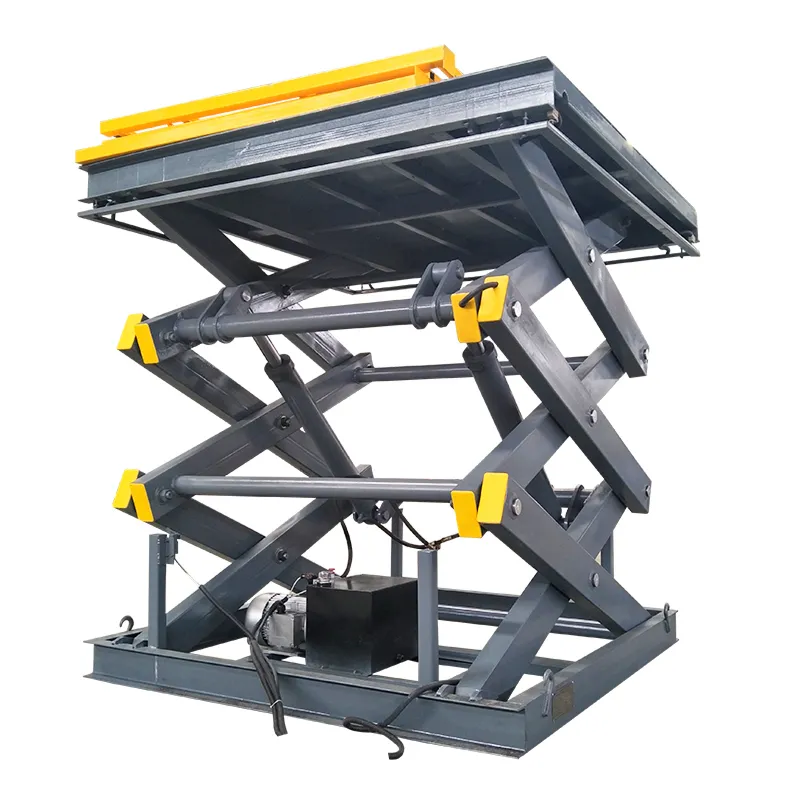
The foundation of how an industrial lift supports high-load transportation lies in its hydraulic power system, which converts fluid pressure into mechanical force capable of lifting substantial weights. The hydraulic pump generates pressurized fluid that flows through a network of cylinders, creating the upward force necessary to elevate heavy materials against gravitational resistance.
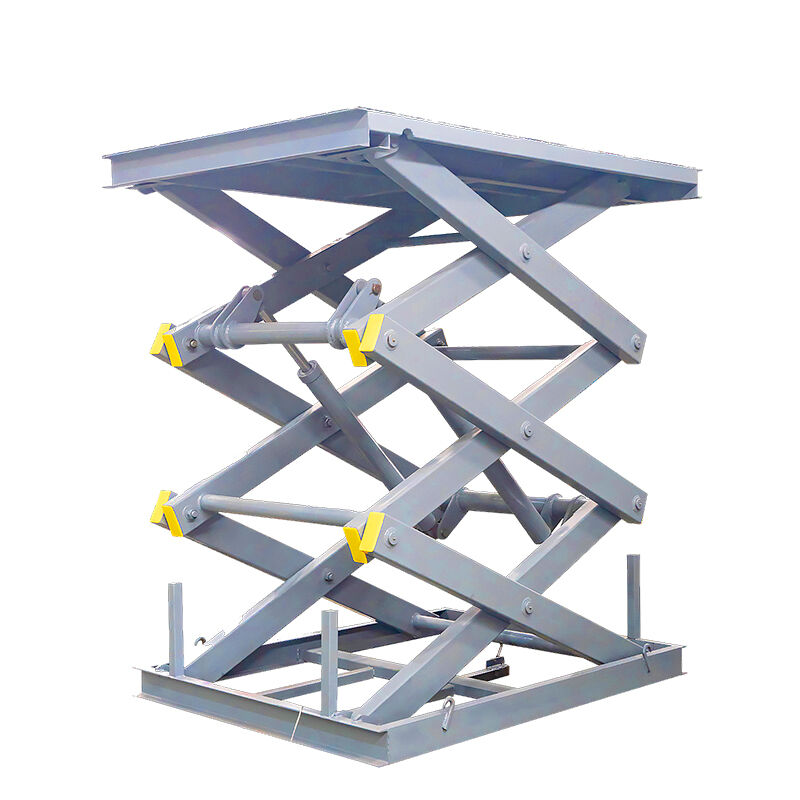
Hydraulic cylinders in an industrial lift are strategically positioned to distribute load forces evenly across the platform structure. Multiple cylinders work in synchronized operation to prevent uneven lifting that could compromise load stability or platform alignment during vertical movement. The hydraulic fluid reservoir maintains consistent pressure levels throughout the lifting cycle, ensuring smooth and controlled elevation regardless of load weight variations.
Pressure relief valves and flow control systems within the hydraulic circuit provide safety mechanisms that prevent overloading while allowing precise speed control during lifting operations. These components enable the industrial lift to handle varying load weights while maintaining operational safety standards required in industrial environments.
Load Distribution and Platform Engineering
The platform structure of an industrial lift incorporates reinforced steel frameworks designed to distribute concentrated loads across multiple support points. Cross-bracing and structural reinforcement elements transfer weight from the load contact points to the hydraulic cylinder mounting locations, preventing localized stress concentrations that could compromise platform integrity.
Platform surface treatments and non-slip materials ensure secure load positioning during vertical movement, preventing load shifting that could create dynamic forces beyond the design specifications of the industrial lift. Edge protection and safety barriers integrated into the platform design provide additional containment for materials during transportation tasks.
Weight distribution calculations built into the platform engineering ensure that maximum load ratings account for both static and dynamic forces encountered during typical industrial lifting operations. This engineering approach allows the industrial lift to maintain structural performance under repeated high-load cycles while providing predictable operational characteristics.
Structural Framework and Safety Integration Systems
Guide Rail and Alignment Systems
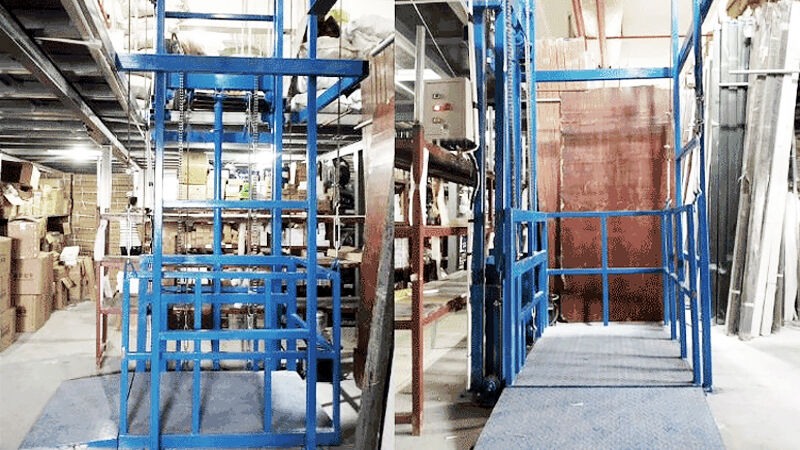
The guide rail system in an industrial lift provides essential stability and alignment control during high-load transportation tasks. Vertical guide rails mounted to structural supports maintain platform alignment throughout the entire lifting range, preventing lateral movement that could compromise load security or create unsafe operating conditions.
Guide wheel assemblies mounted to the platform engage with the guide rails to provide smooth vertical travel while resisting side forces created by uneven load distribution or external influences. The precision machining of guide rail surfaces ensures consistent contact with guide wheels, minimizing wear and maintaining long-term operational accuracy of the industrial lift.
Alignment monitoring systems integrated into the guide rail assembly detect any deviation from proper vertical travel, triggering safety responses that prevent continued operation under misaligned conditions. This safety integration protects both the equipment and personnel working around the industrial lift during high-load operations.
Emergency Safety and Load Monitoring
Emergency stopping systems built into the industrial lift include mechanical locks and hydraulic safety valves that engage automatically if system pressure drops unexpectedly during lifting operations. These safety mechanisms prevent uncontrolled descent of heavy loads that could create hazardous conditions or equipment damage.
Load monitoring sensors continuously measure the weight being lifted and compare actual loads against rated capacity limits of the industrial lift. Overload protection systems prevent operation when load limits are exceeded, protecting both the equipment and ensuring compliance with industrial safety requirements.
Emergency lowering capabilities allow controlled descent of loads even during power failures or hydraulic system malfunctions. Manual override controls provide backup operation methods that enable safe load removal when primary systems are not available, ensuring that the industrial lift maintains operational safety under all conditions.
Control Systems and Operational Precision
Electronic Control Integration
Modern industrial lift systems incorporate electronic control panels that manage hydraulic flow rates, lifting speeds, and positioning accuracy during high-load transportation tasks. Programmable logic controllers process input signals from operators and sensors to coordinate all system functions while maintaining safety protocol compliance.
Variable speed control allows operators to adjust lifting and lowering rates based on load characteristics and operational requirements. Sensitive loads may require slower movement speeds, while routine material handling can utilize faster cycle times to improve productivity without compromising the performance capabilities of the industrial lift.
Position feedback systems provide precise elevation control that enables accurate placement of loads at specific heights. Encoder systems track platform position throughout the lifting range, allowing the industrial lift to stop at predetermined levels with repeatability suitable for automated material handling integration.
Maintenance and Performance Monitoring
Diagnostic systems built into the control architecture of an industrial lift monitor hydraulic pressure levels, cylinder performance, and system temperatures during operation. Performance data collection enables predictive maintenance scheduling that prevents unexpected failures during critical high-load transportation tasks.
Maintenance indicators alert operators when service intervals are approaching or when system parameters fall outside normal operating ranges. Regular maintenance protocols ensure that the industrial lift continues to meet performance specifications and safety requirements throughout its operational lifetime.
System logging capabilities record operational cycles, load histories, and maintenance activities to provide comprehensive performance documentation. This data supports compliance reporting and helps optimize the utilization of the industrial lift within broader material handling workflows.
Application-Specific Design Considerations
Load Capacity Engineering
The load capacity specifications of an industrial lift are determined through structural analysis that accounts for maximum static loads, dynamic forces during acceleration and deceleration, and safety factors required for industrial applications. Engineering calculations consider the combined effects of dead loads, live loads, and impact forces to establish safe working load limits.
Material selection for critical components ensures that the industrial lift maintains structural integrity under repeated loading cycles typical of industrial operations. High-strength steel alloys and specialized welding techniques provide the durability necessary for long-term performance under demanding load conditions.
Load testing procedures verify that completed industrial lift installations meet or exceed design specifications before being placed into service. Proof load testing at percentages above rated capacity confirms structural performance and safety system operation under controlled conditions.
Environmental and Operational Adaptability
Environmental protection features enable the industrial lift to operate effectively in diverse industrial settings, including outdoor installations, temperature-controlled facilities, and environments with airborne contaminants. Sealed hydraulic components and corrosion-resistant materials ensure reliable performance regardless of ambient conditions.
Customization options allow the industrial lift to integrate with existing facility infrastructure and material handling systems. Platform sizes, lifting heights, and control interfaces can be adapted to meet specific operational requirements while maintaining standardized safety and performance characteristics.
Installation flexibility enables the industrial lift to be positioned in locations that optimize material flow patterns within industrial facilities. Various mounting configurations and space-efficient designs accommodate facility constraints while providing full functionality for high-load transportation tasks.
FAQ
What determines the maximum load capacity of an industrial lift?
The maximum load capacity of an industrial lift is determined by the combined strength of its hydraulic system, structural framework, and safety factor calculations. Hydraulic cylinder bore size and system pressure establish the lifting force capability, while the platform structure and guide rail system must support both static loads and dynamic forces. Safety factors typically range from 2:1 to 4:1, meaning the actual structural capacity exceeds the rated working load to ensure safe operation under all conditions.
How does an industrial lift maintain stability during high-load operations?
An industrial lift maintains stability through multiple integrated systems including guide rails that prevent lateral movement, synchronized hydraulic cylinders that ensure level platform operation, and structural reinforcement that distributes loads evenly. Guide wheel assemblies engage with precision-machined rails throughout the lifting range, while load monitoring systems detect any imbalance conditions that could compromise stability during vertical transportation tasks.
What safety features protect against hydraulic system failures during lifting?
Industrial lifts incorporate multiple safety features including mechanical load locks that engage automatically if hydraulic pressure drops, pressure relief valves that prevent system overload, and emergency lowering valves that allow controlled descent during power failures. Redundant hydraulic circuits and backup safety systems ensure that loads can be safely lowered even if primary hydraulic components fail, protecting both personnel and equipment.
How often does an industrial lift require maintenance for high-load applications?
Maintenance frequency for an industrial lift depends on usage intensity and load characteristics, but typical schedules include daily visual inspections, weekly operational checks, monthly hydraulic fluid analysis, and annual comprehensive inspections. High-load applications may require more frequent maintenance intervals, with hydraulic seals, guide wheel assemblies, and safety systems receiving particular attention to ensure continued reliable performance under demanding operational conditions.
Table of Contents
- Hydraulic Power Systems and Load Distribution Mechanisms
- Structural Framework and Safety Integration Systems
- Control Systems and Operational Precision
- Application-Specific Design Considerations
-
FAQ
- What determines the maximum load capacity of an industrial lift?
- How does an industrial lift maintain stability during high-load operations?
- What safety features protect against hydraulic system failures during lifting?
- How often does an industrial lift require maintenance for high-load applications?